
POS systems for ghost kitchens
A ghost kitchen has no dining room, no counter and often no name on the door, which deletes half of what a POS normally does and doubles the other half: order aggregation, kitchen sequencing, and accounting that can tell four brands apart inside one kitchen.
 Judd Alsup and the Equip Payment Solutions team, who install and support restaurant POS systems nationwide and sell Shift4 Dine and Clover.
Updated August 9, 2026. Sources and dates cited on every figure.
The short answer
For a ghost kitchen, where aggregator integration and per brand accounting are everything:
- Toast the strongest aggregator integration and kitchen rail; integration reported at $75 a month plus the usual unpublished rate.
- A virtual brand platform purpose built listing sync and per brand reporting; demo one at four or more brands.
- Shift4 Dine covers the commission free direct channel and lighter kitchens at $29.99 a terminal. We install this.
- Square lean single brand kitchens, paired with aggregator middleware.
The rest of this page is the case for each line, with sources.
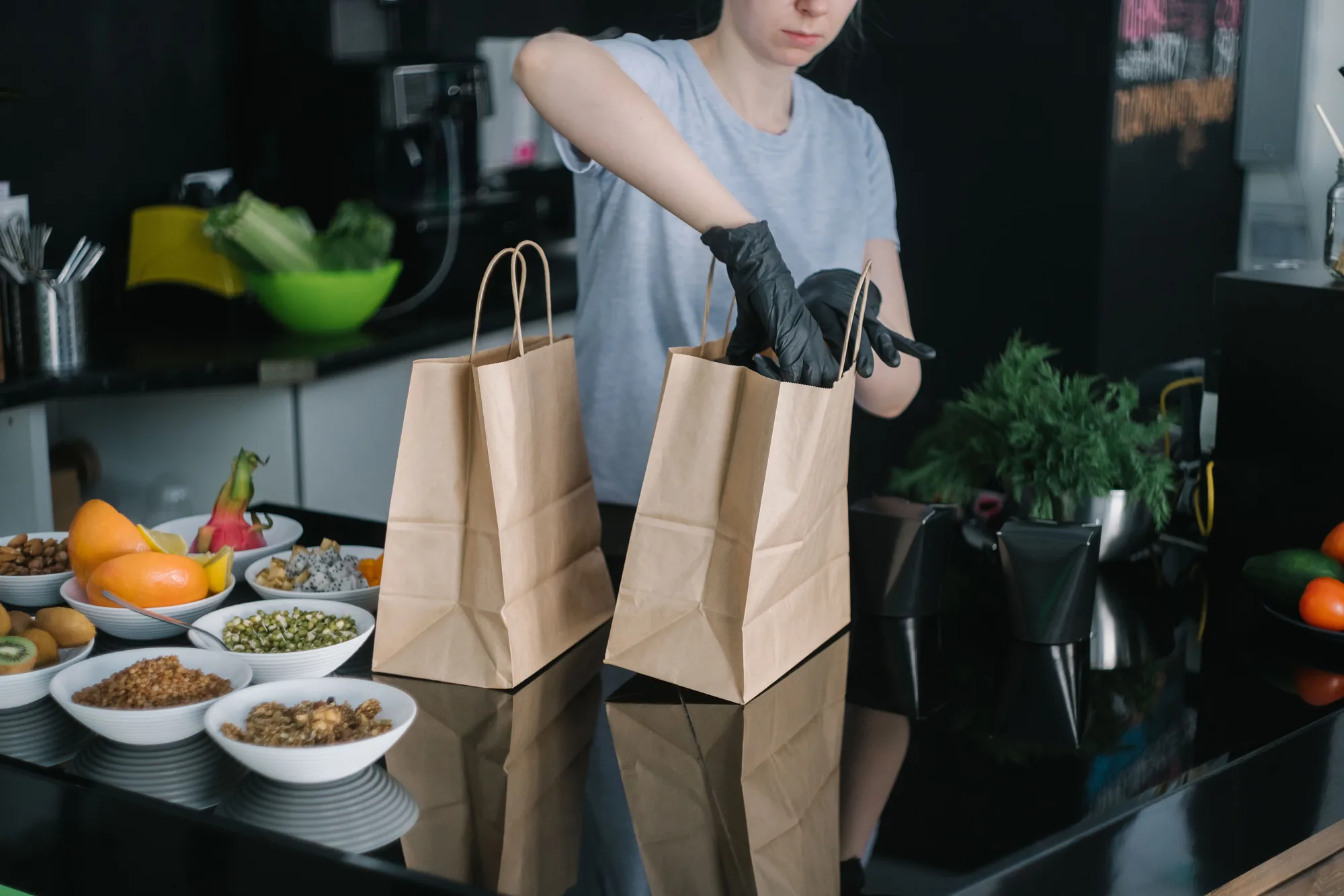
What this room needs from a POS
Every aggregator into one rail
DoorDash, Uber Eats and Grubhub are not a channel here, they are the entire front door. Orders must flow into one kitchen display rail with unified timing, prep sequencing and auto acknowledgment. A shelf of tablets is disqualifying in a business that is nothing but tablets.
Brand isolated menus from one kitchen
Four virtual brands, one line. The wing brand's menu can never bleed into the burger brand's listing, price changes push per brand per platform, and an item 86ed at the fryer goes dark on every brand that sells it, on every platform, at once.
P&L by brand, not by kitchen
Which brand earns after its ingredients, its packaging and its 15 to 30 percent aggregator commission? Kitchens kill and launch virtual brands on that answer. If the reporting cannot split revenue and costs per brand, you are running four businesses on one blurry ledger.
Prep timing tuned to driver arrival
Food that waits gets cold; drivers who wait leave. The rail has to sequence by promised time and driver ETA, not order arrival, and hold fire on items that die under a lid until the pickup window justifies firing them.
Direct channel plumbing for the margin escape
Every commission point recovered by moving a regular to your own online ordering is pure margin. The POS should carry a commission free direct ordering page per brand, because the aggregators are your marketing cost, not your destiny.
The commission is the rent, and the menu is engineered around it
Ghost kitchen math starts from a number no other concept on this site pays: 15 to 30 percent of most sales goes to the platform that delivered the order. Everything else is engineered backward from that. Menus skew to items with delivery proof margins, packaging is a real ingredient cost, and pricing on platform runs higher than any direct price because the commission has to live somewhere. The POS's job in all this is truthful per brand, per platform accounting, so you can see that the taco brand nets 12 points on DoorDash and 31 direct, and act on it.
Virtual brand discipline is the operational hard part. A brand is a menu, a name and a set of platform listings, and kitchens run four or six of them to multiply shelf space in the apps. The failure mode is drift: the same wings listed under three brands at three prices, a shared fryer item 86ed on one brand and live on two others, reviews tanking on the brand nobody remembered to update. The system has to make brand isolation structural, one item, mapped to many listings, updated everywhere in one motion, or entropy wins by the second month.
Order flow is the third leg. At dinner peak a ghost kitchen fields orders from five platforms simultaneously with zero walk in buffer, and the kitchen display has to merge them into one honest production sequence with per platform prep promises. Auto accept with throttling matters more here than anywhere: a kitchen that accepts everything at 7pm serves everything late, and on the aggregators, late is a ranking penalty you pay for weeks.
The systems, judged for this room
Toast's aggregator integration leads, at Toast prices
Direct platform integrations, brand level menu management and the strongest kitchen display story make Toast the incumbent choice for multi brand kitchens, reported at $75 a month for the integration plus per terminal software and the usual unpublished rate. In this concept, that integration fee buys back its cost in hand keying alone.
Purpose built ghost kitchen platforms exist and deserve a demo
Systems built around virtual brand management handle listing sync and per brand P&L more natively than restaurant POS retrofits. We sell none of them; a kitchen running four plus brands should see one before settling, same rule as our specialist rows on pizza and taprooms.
Shift4 Dine covers the direct channel side well
Included commission free online ordering per brand at $29.99 a terminal is the margin recovery tool, and the KDS handles a single or two brand kitchen honestly. Deep multi brand aggregator sync is thinner than Toast's; we install this and we just said so anyway.
Square works for a one brand delivery kitchen
A single virtual brand running lean can pair Square's published pricing with aggregator middleware and keep costs near zero while proving the concept. The middleware subscription is the real cost; price the stack, not the register.
Whatever you run, the middleware layer is a real vendor too
Order aggregation services that merge platforms into one screen sit underneath many setups. They carry their own monthly fees and their own failure modes at peak. Diligence them like a POS, because for a ghost kitchen, they are one.
The economics: commissions dwarf processing, and both still count
Perspective check: this entire site argues over processing spreads measured in tenths of a percent, and a ghost kitchen hands aggregators 15 to 30 whole points on most revenue. The biggest financial lever is channel mix, moving repeat customers to direct ordering where the commission is zero and the processing runs a published 2.9 to 3.3 percent online. Recovering ten orders a day to direct at a $25 ticket saves roughly $1,500 a month in commission. No rate negotiation on earth beats that.
Processing still deserves five minutes: nearly all ghost kitchen direct volume is card not present, where rates run a point higher than counter rates and every vendor's online rate differs from the number on their homepage. Compare online rates specifically, then spend the rest of your energy on the commission problem, because that is where the business lives.
What the major systems charge
| System | Software | Card present rate | Contract | The part they lead with least |
|---|---|---|---|---|
| Toast | $0 to $69per terminal, reported | 2.49% to 3.69%+ 15c, reported | 1 to 3 years | The rate climbs with add-ons. Online ordering and delivery move Starter Kit from 3.09% to 3.39%, and gift cards and loyalty take it to 3.69%. That higher rate then applies to every order, not just the online ones. Processing is mandatory and hardware is locked to Toast. |
| Square | $0 / $49 / $149per location, published | 2.6% / 2.5% / 2.4%+ 15c, published | None | The free plan carries the highest rate. Above roughly $25,000 a month in card volume it costs more than the paid one. Kitchen display and kiosk are excluded from free. |
| Clover | $89.95 to $129.85plus $849 to $4,447 hardware, reported | 2.3% + 10crestaurant plans, reported. The reseller sets your final rate | 36 months | Your rate depends entirely on who sold it to you, and identical hardware carries very different pricing from different sellers. Read who owns the equipment before signing. |
| Geniuswas Vital | $0 / $42 / $129published | 2.6% + 10cpublished | 3 years | Their own footnote requires a three year term, 4% cash discounting and $250,000 a year in volume, and mentions an early termination fee. Their pricing page asks about termination fees and then does not answer it. |
| Shift4 DineWe install this | $29.99per terminal, published | Interchange plusmarkup shown in writing | 36 months | What a rep will not lead with: there is a $250 annual program fee per device, an annual regulatory fee, and a yearly escalator on a 36 month agreement. We put all of it in the quote. What you get is a rate where the processor's margin is visible instead of blended into one number. |
| Lightspeed | $69 / $189 / $399published | 2.4% to 2.6% + 10creported, sources disagree | Month to month or annual | A reported $400 a month penalty applies for using a payment processor other than Lightspeed Payments, which makes their processing effectively mandatory. The published software page never states whether prices are per terminal or per location. |
| TouchBistro | $69 or $119published | Not publishedquote based, partner processors | Sources conflict | One reviewer reports month to month, another reports multi year auto renewing contracts that cannot be terminated early. The add-on stack is where the bill grows: reported $25 to $229 a month per module, and a reported $200 setup fee. |
| SpotOn | $0 or $55per station, published | 2.79% + 20c or 2.45% + 15cpublished | 2 years or monthly | The most published rate card in the category after Square. The fine print: a reported $995 conversion fee plus doubled software cost if you switch processors, and cancelling All-In inside a year claws back the hardware discount. |
Square, Genius, SpotOn, Shift4 and Lightspeed software figures are published by those vendors and were read on their own pages on 8 August 2026. Toast, Clover and TouchBistro figures are reported by Merchant Maverick, Expert Market, POSUSA, NerdWallet, business.com and KORONA POS, cross checked against at least two independent sources where possible and labelled where sources disagree. Software units differ: Square prices per location, Toast and Shift4 per terminal, Clover per device, SpotOn per station. Rates change without notice. General guidance, not legal, tax or accounting advice.
Questions owners ask
What POS does a ghost kitchen actually need?
One that merges every aggregator into a single kitchen rail, keeps brands isolated in menu and money, and runs a commission free direct channel. Toast leads the integration race and we name that as a competitor; purpose built virtual brand platforms deserve a demo at four plus brands; our own answer covers the direct channel and lighter kitchens.
How many virtual brands can one kitchen run?
As many as the line can cook without cross brand quality bleeding, which in practice is usually two to five. The constraint is not the POS, it is prep complexity and the review scores of the weakest brand. Kill brands the per brand P&L cannot defend; that report is the entire reason the accounting requirement exists.
Is it worth building a direct ordering channel?
It is the only route out of the commission. The realistic play is aggregators as customer acquisition and a box insert pointing regulars to the direct page, where the same order nets 15 to 25 points more. The POS's included online ordering, if it has one, is the cheapest possible version of that channel.
What kitchen hardware does a ghost kitchen need?
Kitchen displays and printers, driver pickup screens if volume warrants, and often no customer facing terminal at all. That deletes most of the hardware bill a normal restaurant pays. Spend the savings on a second internet connection, because a ghost kitchen with no internet is a dark kitchen in the wrong sense.
Have your own numbers checked
Send last month's statement. We read it with you, free, and tell you straight whether we are the ones to fix it.
Send your numbers
About a minute. It goes straight to the Equip team.
It reaches the Equip team. A person calls you back, and if we do not have a crew near you, the team routes it to whoever serves you best. We never ask for card or bank details on this site.